Leading With Empathy: A New Era of Crisis Management
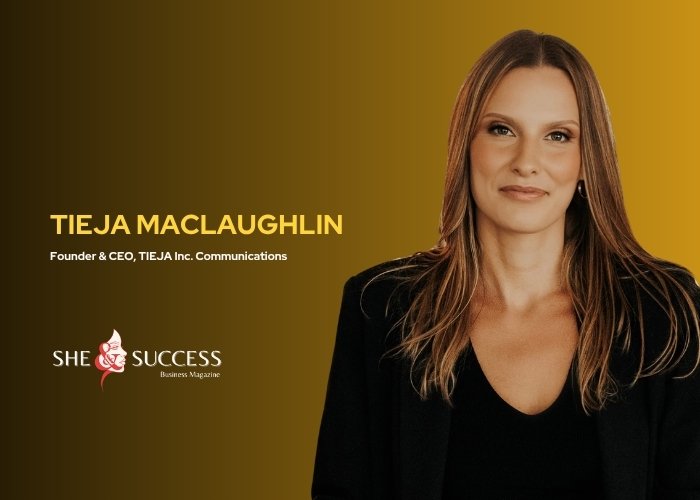
In an exclusive interview with She & Success Business Magazine, Tieja MacLaughlin, Founder of TIEJA Inc., opens up about the philosophy behind her bold, human-centered approach to crisis management. Known for navigating high-stakes reputational challenges with clarity and compassion, Tieja shares how accessibility, authenticity, and trust have shaped her work.
Tieja MacLaughlin is the Founder of TIEJA Inc., a sought-after communications firm specializing in crisis management for individuals, executives, and brands who are experiencing reputation damage including social media fallout, legal issues, and other sensitive matters that may attract media attention or public scrutiny. Tieja offers a no-nonsense, real-world approach to crisis communications and is frequently relied upon as a strategic asset in high-stakes scenarios. She has worked with brands of all sizes – from corporations, institutions, and unions to small businesses, public figures, and professionals such as athletes, actors, and first responders.
You founded TIEJA Inc. after realizing a gap in the accessibility and approach of traditional crisis communication services. What inspired you to challenge this outdated model and build a firm that leads with empathy, transparency, and accessibility?
Accessibility has always been a focal point of my business. Historically, crisis communications firms have catered almost exclusively to large companies with equally large budgets – but in the digital-first era, a growing number of small and medium-sized businesses, as well as individuals and executives, require crisis communications support. These people don’t want or need five- or six-figures retainers – they need ad hoc support and practical solutions, which is where I come in. There’s also a common stereotype that crisis communicators “cover up” or “spin” problems – I wanted to challenge this approach because it’s not only unethical, but it’s completely counterproductive. My objective is to resolve your issue at its core, and provide sustainable solutions that promote transparency and rebuild trust. I approach every client with empathy, and create a judgement-free space where they can learn, grow, and ultimately avoid future crises.
You’ve mentioned that staying true to your beliefs was key to overcoming societal expectations and biases faced by women in business. How have your personal values shaped your leadership style and decision-making as an entrepreneur?
Trust is one of my core values, and it’s at the heart of everything I do. I want my peers and clients to know that I am true to my word and that they can always count on me. Hard work is equally important – tackling challenges head on with grit and humility, avoiding shortcuts, and leading with integrity. Being clear about what I stand for allows me to lead with confidence and make difficult decisions with conviction. I’ve learned that you can’t please everyone – but if you’re clear about your values and live by them, you’ll find deeper purpose and fulfillment while attracting those who are likeminded.
Your work emphasizes restorative justice and proactive reputation management—two areas not often associated with traditional PR. How do these principles influence the way you help clients navigate conflict, accountability, and rebuilding trust?
I always promote a proactive approach to reputation management. Most people come to me after there’s a problem, which means we’re already starting behind the eight ball. If you change your mindset to think about reputation proactively, you can establish safeguards to mitigate risk and be prepared for when something – inevitably – goes wrong. Unfortunately, people are quick to judge – whether a mistake has been made, there is perceived wrongdoing, or someone simply holds an unpopular opinion. Public shaming has become an all too common response, which only perpetuates harm – because while shame may be effective in the short term, it doesn’t lead to lasting change. This is where restorative justice comes in. I learned about the principles of restorative justice through Peacebuilders Canada, a non-profit that supports rehabilitation for youth in the justice system. The principles of restorative justice are rooted in Indigenous culture, and centre on accountability and community reintegration. Incorporating a restorative justice approach into my work has allowed me to build stronger connections with my clients, encourage them to see new perspectives, and allow them to move forward with their lives productively.
You credit emotional intelligence and empathy as key differentiators in your leadership. How have these “soft skills” become strategic tools for growth and helped you stand out in a competitive communications industry?
Emotional intelligence is a critical soft skill for business, and relationships in general. It’s the ability to understand your own emotions, recognize the emotions of others, and manage both effectively. When you understand human drivers and motivations – the why behind someone’s actions – communication and connection are strengthened. When people come to me for support, they’re often at one of the lowest points in their career or life, and are placing their trust in me to help them navigate forward – I don’t take that responsibility lightly. I genuinely care about my clients’ well-being and feel honoured to support them through their most challenging moments.
As someone who’s built a company by challenging convention, what advice would you give to women entrepreneurs who are trying to carve their own paths in industries where traditional systems still dominate?
Do the work – and do it well. Don’t start by announcing how you’re going to change the system; just get to work. Too many entrepreneurs lead with branding and marketing initiatives, when those efforts should come later, after there’s a proven track record. Real buy-in, especially from people reluctant to change, comes only when you’ve shown that your ideas actually work. Focus on making sustainable progress in a small corner of your industry and grow from there. Once you’ve built trust with your peers, they’ll promote your ideas for you.